
myFenyx: turning a manual HR process into a real application
In a consulting firm, the value produced comes first from the people who work there, which gives the internal rewards scheme a particular importance. At Fenyx Group, that scheme nevertheless ran entirely by hand: every operation went through the human resources department, and a consultant who wanted to know their points balance had to phone to get it, with no way of looking it up themselves.
As a consultant in the group, I proposed to take this scheme over and turn it into a full application, and I was able to carry the project out with the support of management.
The starting point
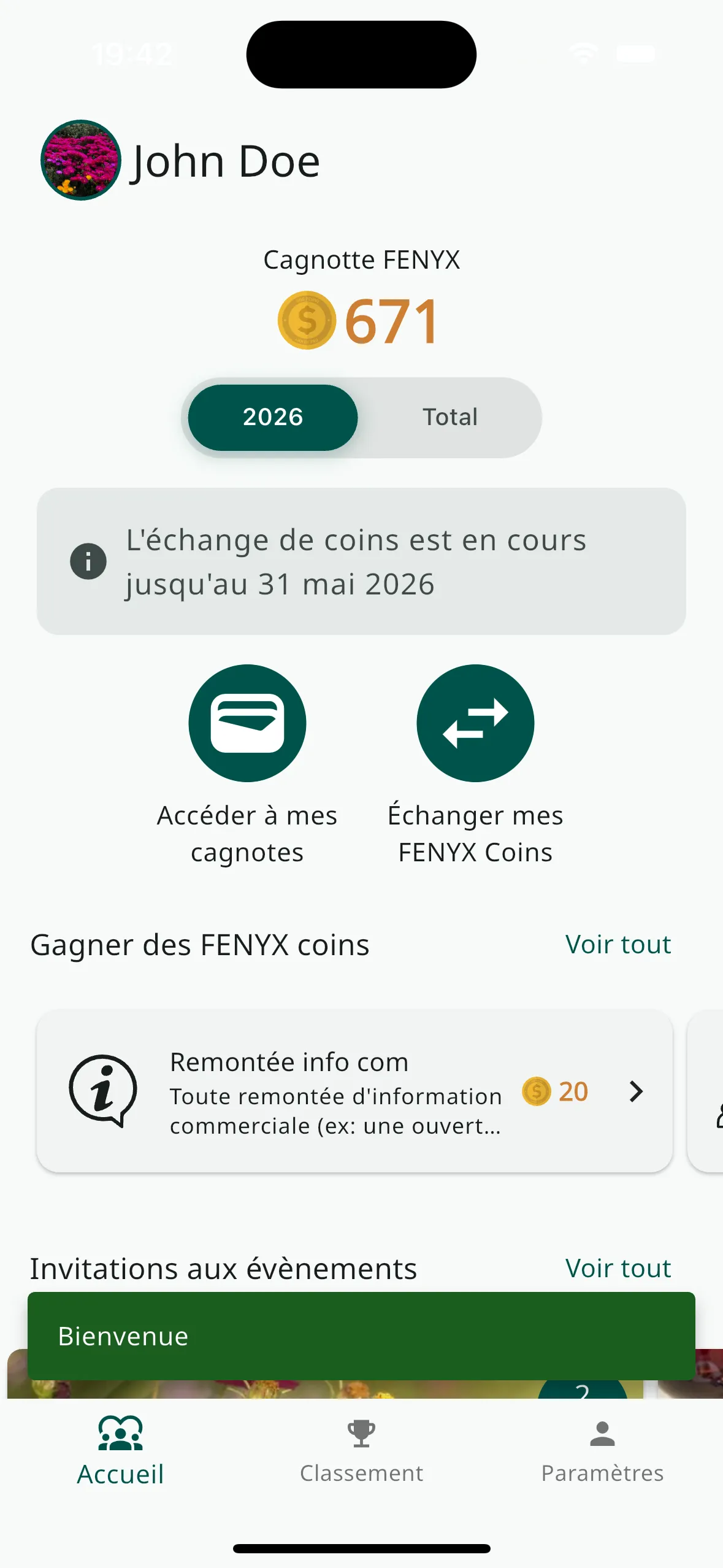
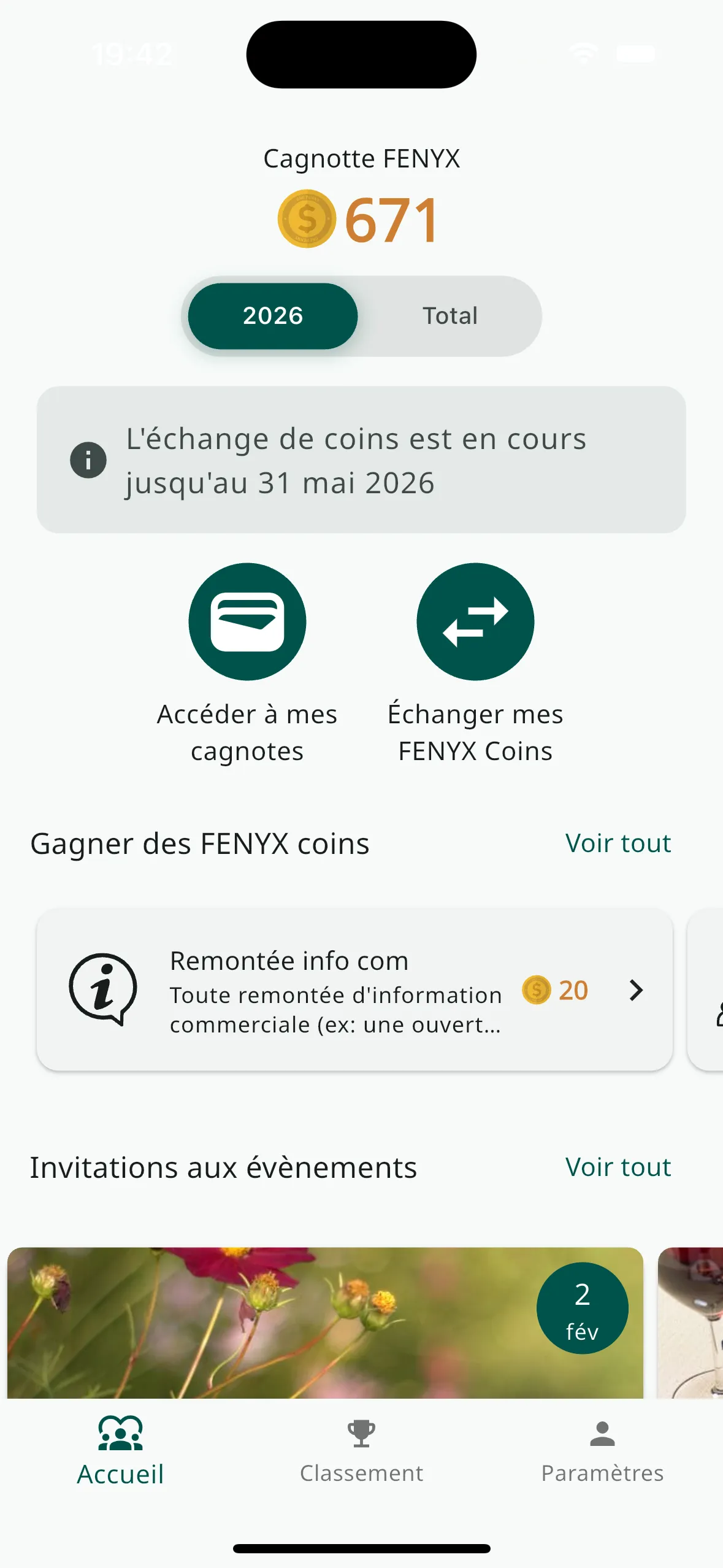
The aim was to build a cycle that fits into an employee’s daily routine, without them having to go and look for the information. It first required making everyone autonomous, by giving a digital form to the engagement levers, namely referrals, client satisfaction and involvement in internal life, so that each consultant could follow their own progress directly.
It also had a collective dimension, since rankings kept up to date in real time were meant to sustain the wish to get involved without requiring repeated reminders from managers.
The product: an earn, save, spend loop
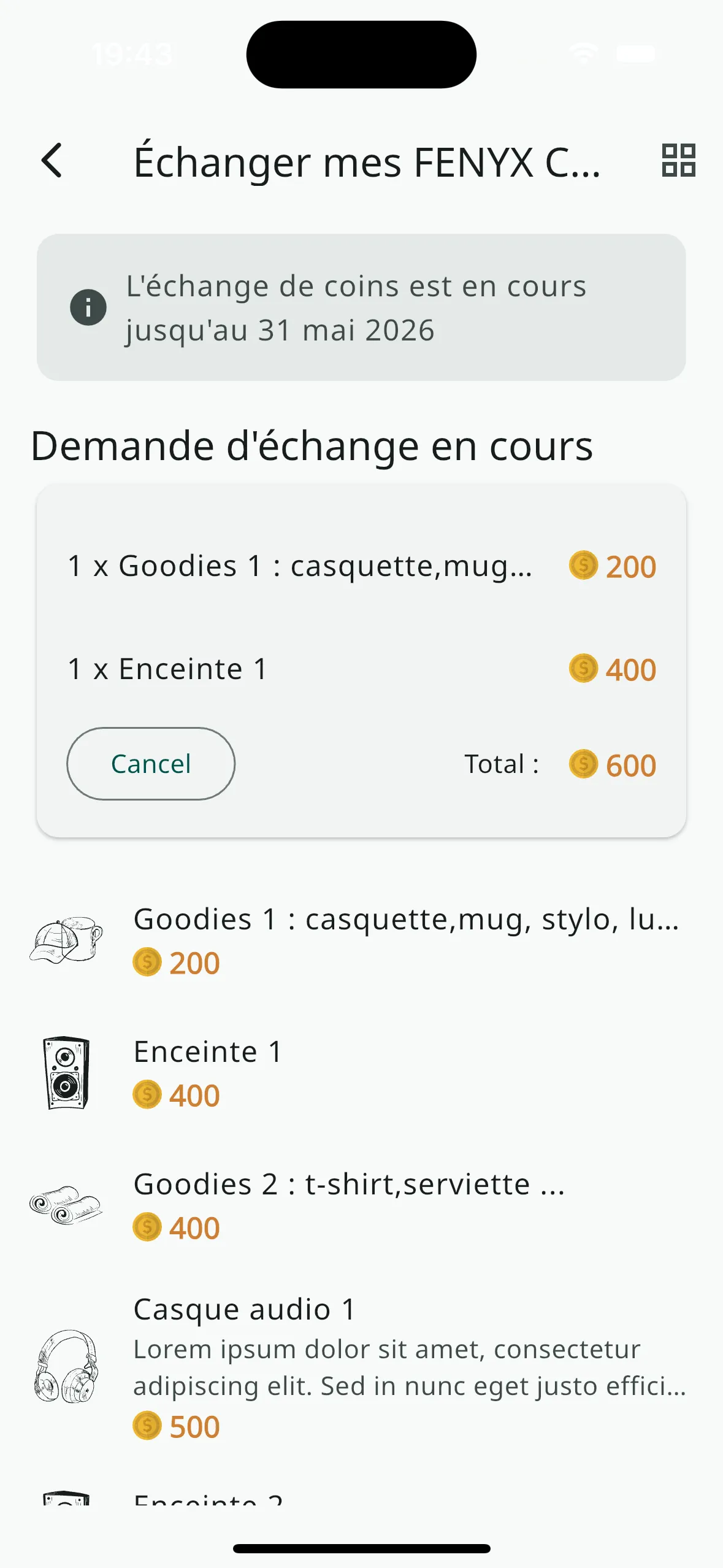
The application runs an internal economy, in which points are earned, kept and then spent. Such an economy holds only if its data are reliable, which led to several structural choices, set out below.
The technical side: building a reliable system
Performance and scaling
Recomputing balances and rankings every time the application opens was not an option. I therefore chose denormalised tables, which keep these values already computed, so that rankings appear with no perceptible delay, even as the volume of data grows.
Handling Coins like a bank account
Points are kept by year, like the annual budgets allocated by human resources, and an exchange consumes them in FIFO order, first in, first out: the oldest points are spent first, which avoids bad surprises for the user as well as for accounting.
Beyond rewards: a meeting point
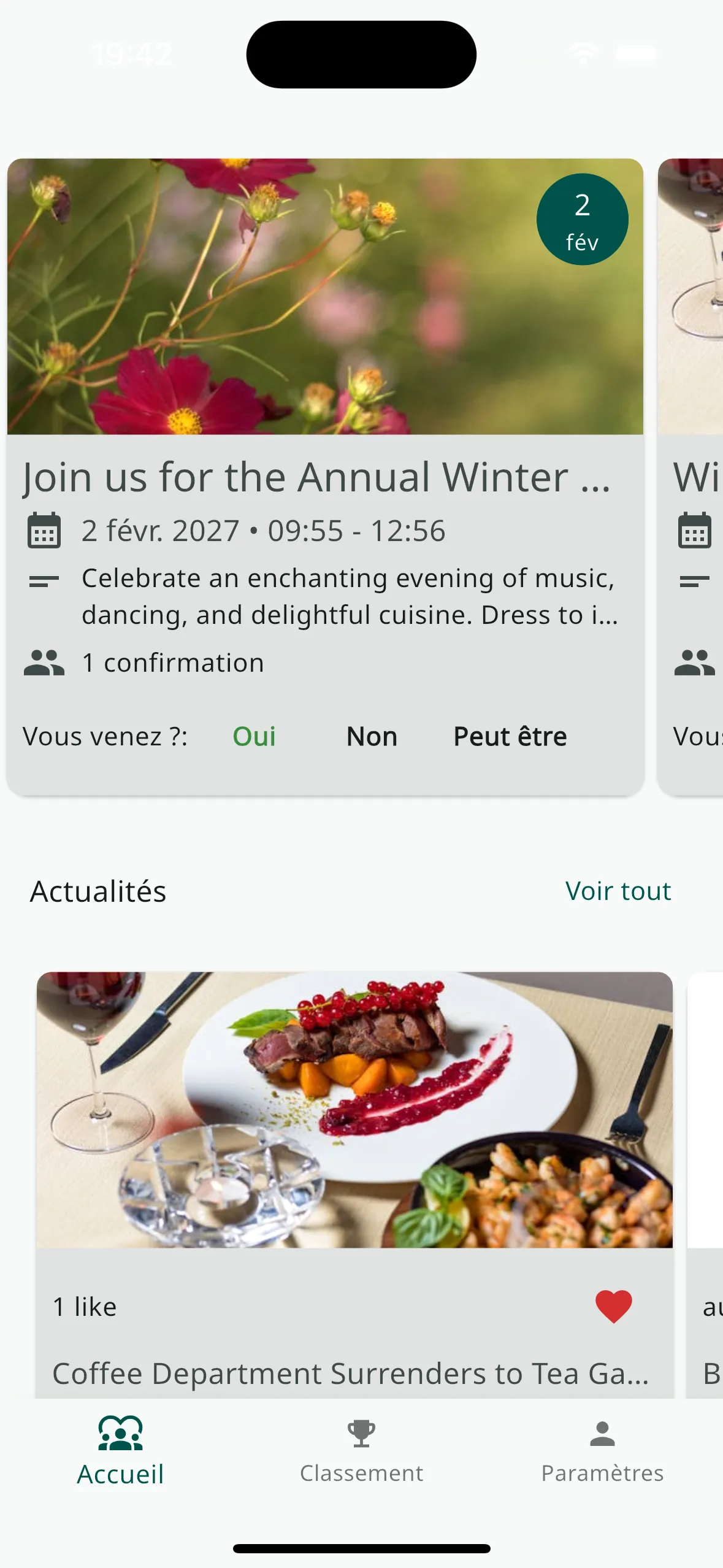
myFenyx did not stop at managing points. Adding a news feed and event management made it the meeting point of the group, and a significant share of internal communication now goes through it. The load on human resources is lighter as a result, since most requests are handled by the consultants themselves.
Decisions can finally rest on data, since it is possible to observe in real time which actions generate the most engagement and to adjust the scheme accordingly.
What I take from it
This project illustrates how I approach engineering: the quality of the code matters, but it is judged by what it actually changes for the company. myFenyx started from an everyday annoyance, and it let me see that an answer built with Django and Flutter could really change how an organisation works.